MTWSF conservation committee
Region 1 Conservation
Region 1 Conservation
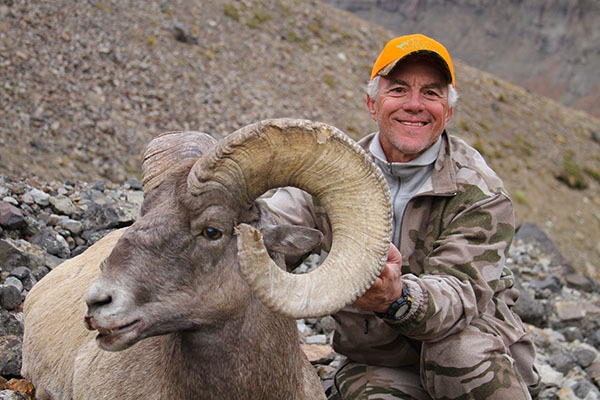
Bennie Rossetto
Kalispell, MT
Bennie’s goal as a conservation committee member is to grow healthy bighorn populations through disease prevention, habitat improvement, reduced transportation mortality, responsible predator management, and collaborative, science-based partnerships with agencies, tribes, landowners, and producers.
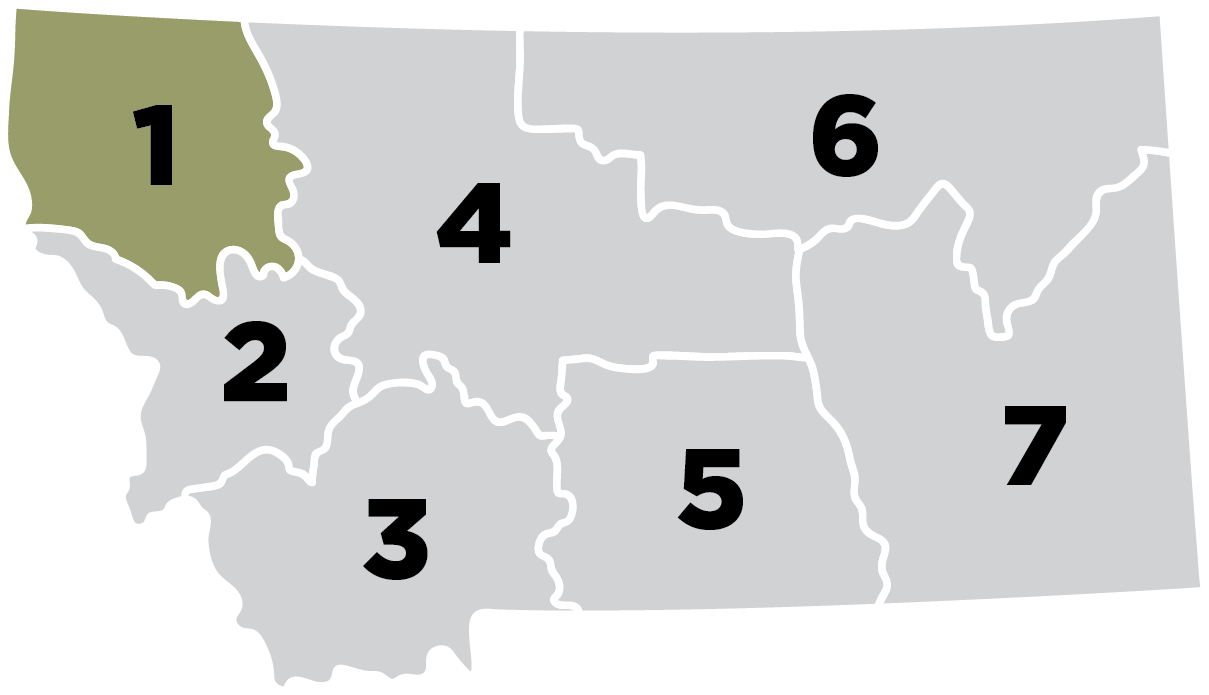
Region 1 Updates
HD100 — Kootenai Falls
This unit north of the Kootenai River between Libby and Troy, once produced Boone and Crockett rams. I have a memorable photo of Paul Schaffer paddling his recurve bow kill ram across the river in a canoe. The unit sheep population is estimated to be 85, down from 100 sheep, 2 tags, down from 3 mainly because of lower age class harvest. The population goal is 150.
Priorities: Threats include wolf/lion predation and potential road mortality. I am not aware of M.ovi threats.
HD101 — Ural-Tweed
I list this first because we no longer have a permit for this herd, and most Region One hunters don’t know it exists. It is a native herd of Rocky Mountain Trench genetics, and once thrived on both sides of the Kootenai River. Libby Dam created Lake Koocanusa, dividing the herd, and over time the west side sheep became extinct. Herd size was 150-200 in ’60’s, fell to 25 in 70’s, and rebounded to 150-200 in ’90’s prior to wolf reintroduction.The herd is now a remnant of 30-35 or so animals, the main threat to its existence now being highway mortality, mountain lions, and habitat transition. Population objective is 100-125 with habitat enhancement and highway mortality mitigation.
Priorities: #1 Limit highway mortality. #2 Improve habitat (forest succession). #3 Reduce predation (mainly lions).
HD102 — galton range
This is predominantly a British Columbia herd with its southern extension being the Galton Range, east of the Tobacco Valley, to Therriault Pass. It, too, is of native Rocky Mountain Trench genetics. Probably its biggest ram in recorded history was taken by a nonresident, down in the foothills in 2023. The major threat for this herd is a landowner with a domestic sheep herd. One permit is offered. Population estimates are difficult because of the forest environment, but the goal is >150 ( both sides of the border, I assume). We are working on ways to prevent M.ovi such as helping provide a double fence along the private land boundary, and providing a unique species of guard dogs that the sheep owner actually has. We are also in contact with our WSF counterparts in B.C, as well as the local Tribal and B.C. biologist to coordinate efforts.
Priorities: #1 Prevent commingling with domestic sheep and goats near the Canadian border. #2 Eliminate highway mortality within a mile of border crossing. #3 Habitat enhancement (knapweed on Woods Ranch WMA, forest succession).
HD121 — north clark fork
19 sheep were transplanted here from Gibson Lake (423) and Wildhorse Island in 1959. This was one of the best units in the state for record class bighorns when Duncan Gilchrist penned “Montana, Land of Giant Rams” in the ’80’s. The population was over 400, and we had ewe and half curl ram tags (very controversial at the time). He wrote off the Missouri Breaks as not worthy of a search for a giant. How time can change things. Highway and railroad mortality has wiped this unit from its glory days. Population was 200 in the ’90’s to 2009, then 50-70 since. The goal is 250. There is one permit. The genetics for great rams (and ewes) are there.
Priorities: #1 Control highway and railroad mortality with fencing, crosswalks, thermal sensing of wildlife on roadway triggering flashing signs, someday overpasses. #2 Predator control (lions and wolves).
HD 122 — Clark Fork Cutoff
Wildhorse Island sheep were transplanted here in 1979 and 1982. After closure in 2015 because of a dramatic population decline from M.ovi, 20 sheep from unit 622 were transplanted. The population estimate is now around 110 to 120, and we have 2 permits.
Priorities: #1 Continue to prevent commingling with domestic sheep and goats. #2 Highway/railroad mortality is recently becoming a threat. Highway mitigation is planned. Railroad mitigation is needed.
HD 123 — Cabinets
This is a rugged unit north of the Clark Fork and east of the Idaho border, extending northward to the Kootenai River. Primary habitat is the Cabinet Mountains, one of our finest mountain ranges in Western Montana, but it also includes the Scotchman Peak range (West Cabinets) along the Idaho line. Both ranges have mountain goats. 2 permits are offered. The population is thought to be 20 on Berray Mountain, and 20 in subalpine habitat.
Priorities: Minimize highway mortality on short stretches of HWY 56.
HD 124 — paradise
This small unit, tucked between Hwy 28, 200, and the Flathead Reservation, punches above its size. 6 ram permits and 2 ewe permits are offered. Genetics for record class rams exist here. I suspect the Reservation provides a reservoir for this unit, allowing the current harvest. Railroad borders much of the unit, and proximity to 2 highways, makes highway and train mortality likely. Proximity to Plains adds risk of more exposure.
Priorities: #1 Minimize highway and railroad mortality. #2 Find ways of keeping bighorns from getting close to Plains where some domestics are kept.
HD 199 — wild horse island
Yes, it has a unit number. The original transplant came from the Missions (yes), in 1939, 6 from Sun River in 1947, 2 from Ural Tweed in 1987 (remember, Rocky Mountain Trench genetics). I will have a report on Wildhorse in a future publication, since it is our nursery, and the major source of top 10 record book rams. Currently habitat degradation has become a problem, with increased mule deer mortality. Reduced lamb survival is a concern.
Priorities: #1 Improve habitat (knapweed, cheatgrass control). #2 Keep mountain lions (and bears) off the island.
mtwsf newsletters
Partners In Conservation